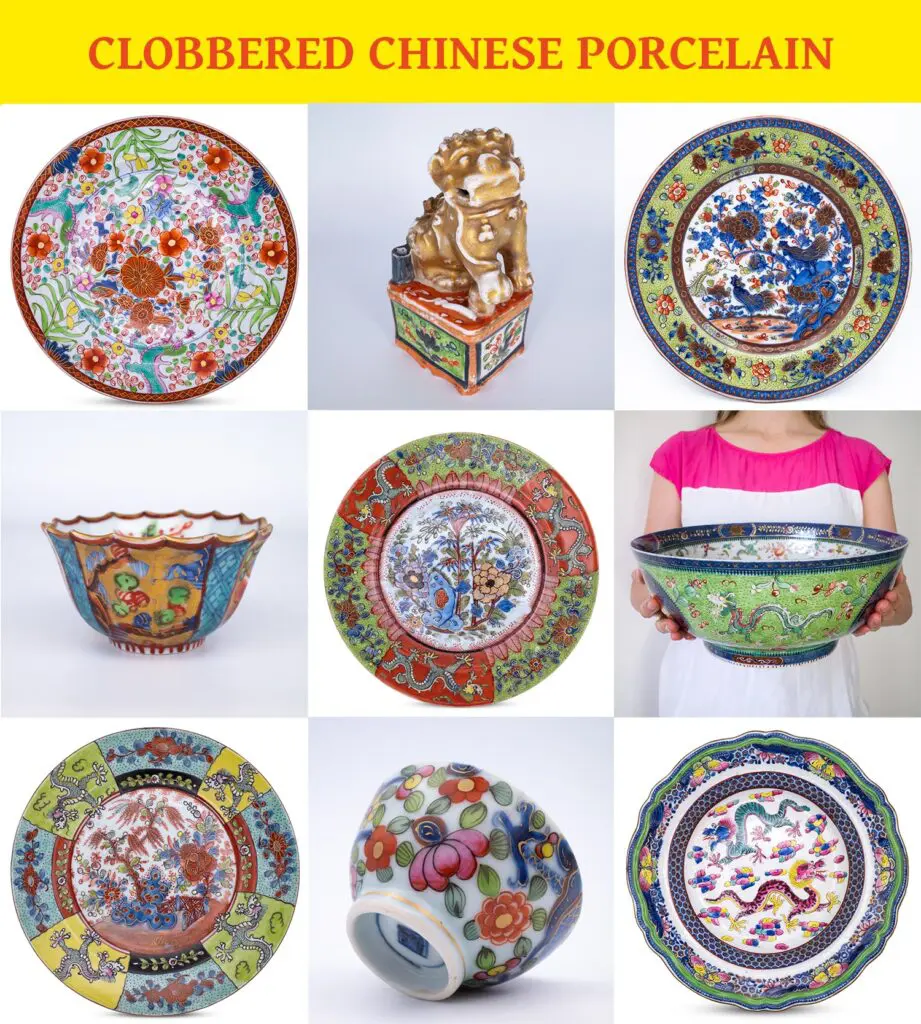
Clobbered porcelain or porcelain with later polychrome overglaze decoration done in Europe is a fascinating sub-category of antique Chinese export porcelain. What started as a simple addition of gilt borders, spouts or handles later evolved into more elaborate patterns such as Dutch decorated ‘Amsterdam bont’ porcelain imitating Imari palette, and even more colourful English pieces – with bright green, yellow or purple enamels – produced in the early 19th century. Reason for over-decorating plain blue and white porcelain with these colourful enamels was to make them more desirable and often also to conceal small imperfections or damage. Opinions of collectors on clobber ware are greatly divided as European decoration is often ‘heavy-handed’ and lacks the elegance of original Chinese patterns. We think that this group should not be overlooked because it is an important part of our material culture and pieces themselves are very often completely unique one-of-a-kind examples, making them highly collectable.
Below is a selection of some of the great pieces of Chinese clobber ware that we’ve handled in the past.
Early 18th century Chinese ‘Amsterdams Bont’ clobbered Kangxi an hua porcelain dish – this type of Chinese porcelain decorated in the Netherlands was a response to great popularity of Imari porcelain during the 18th century. Simple blue and white porcelain could have been bought for low prices, decorated with overglaze enamels similar to those of imari porcelain and then sold for a much higher price. Decoration sometimes featured scenes with European figures and architecture.
Rare early 18th century Chinese Kangxi period export porcelain dish, decorated shortly after in Holland in the manner of Japanese Kakiemon porcelain. Pattern depicts a pair of figures in the garden, listening to a singing nightingale perched on top of a bird cage.
For reference see collection of The Metropolitan Museum of Art,object 1995.268.140
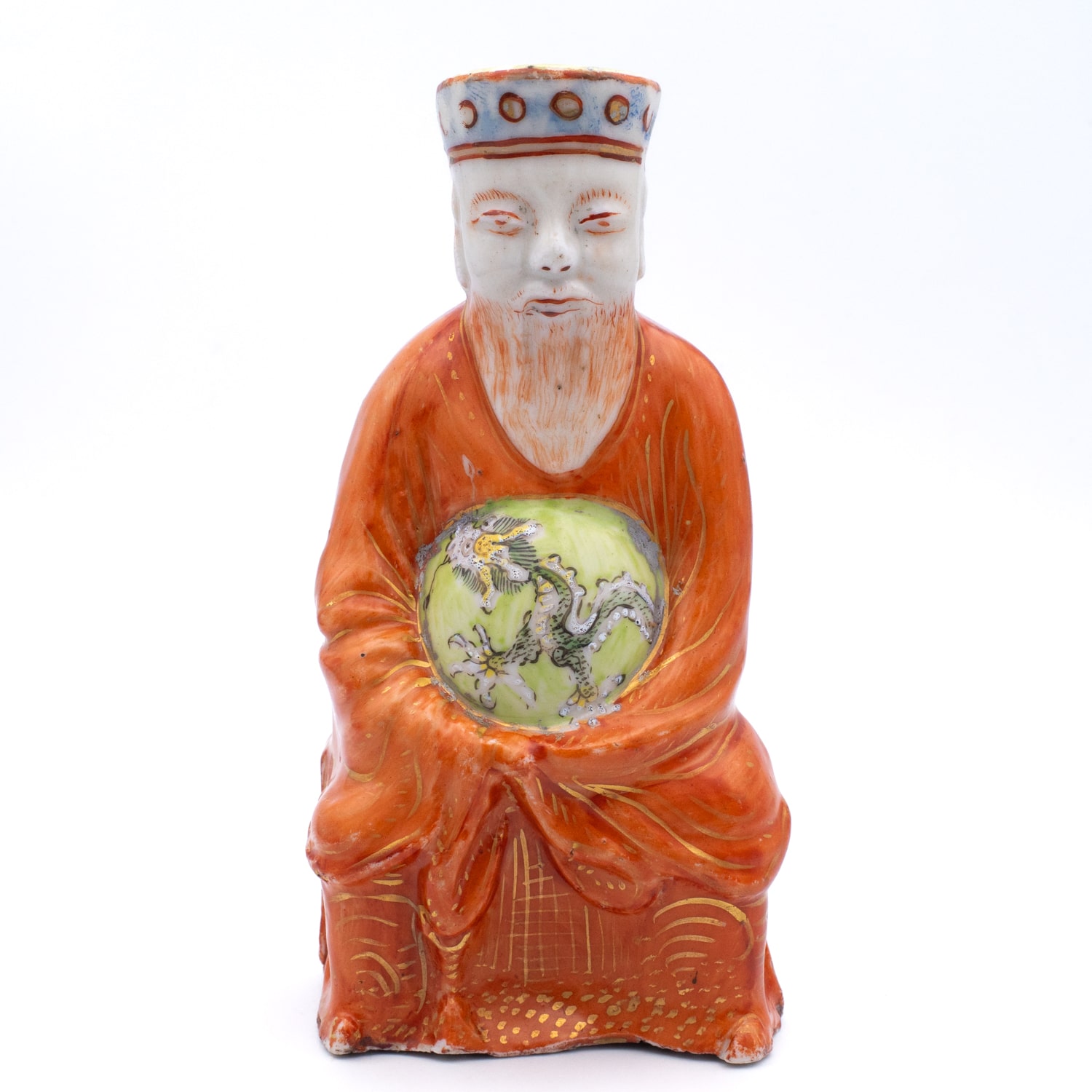
Antique Chinese Clobbered Blanc de Chine Porcelain Dignitary Figure. 17th-18th century. Similar, undecorated example is recorded in the 1688 Burghley House collection inventory.
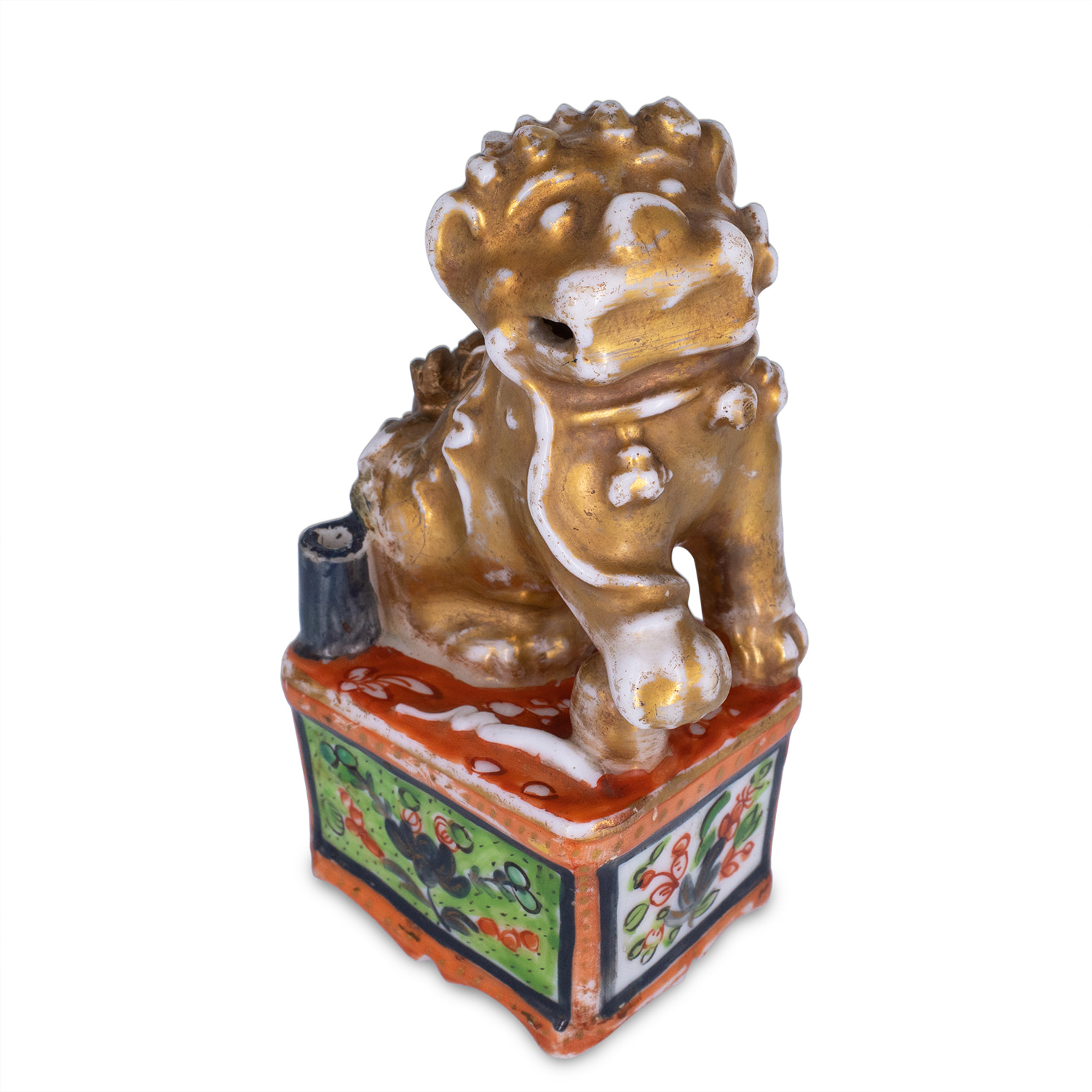
Antique Chinese clobbered Blanc de Chine Buddhist lion joss stick holder, Kangxi Period (1662-1722) – overglaze decoration was in this case used to conceal damage (missing parts of the joss stick holder and tail of the lion).
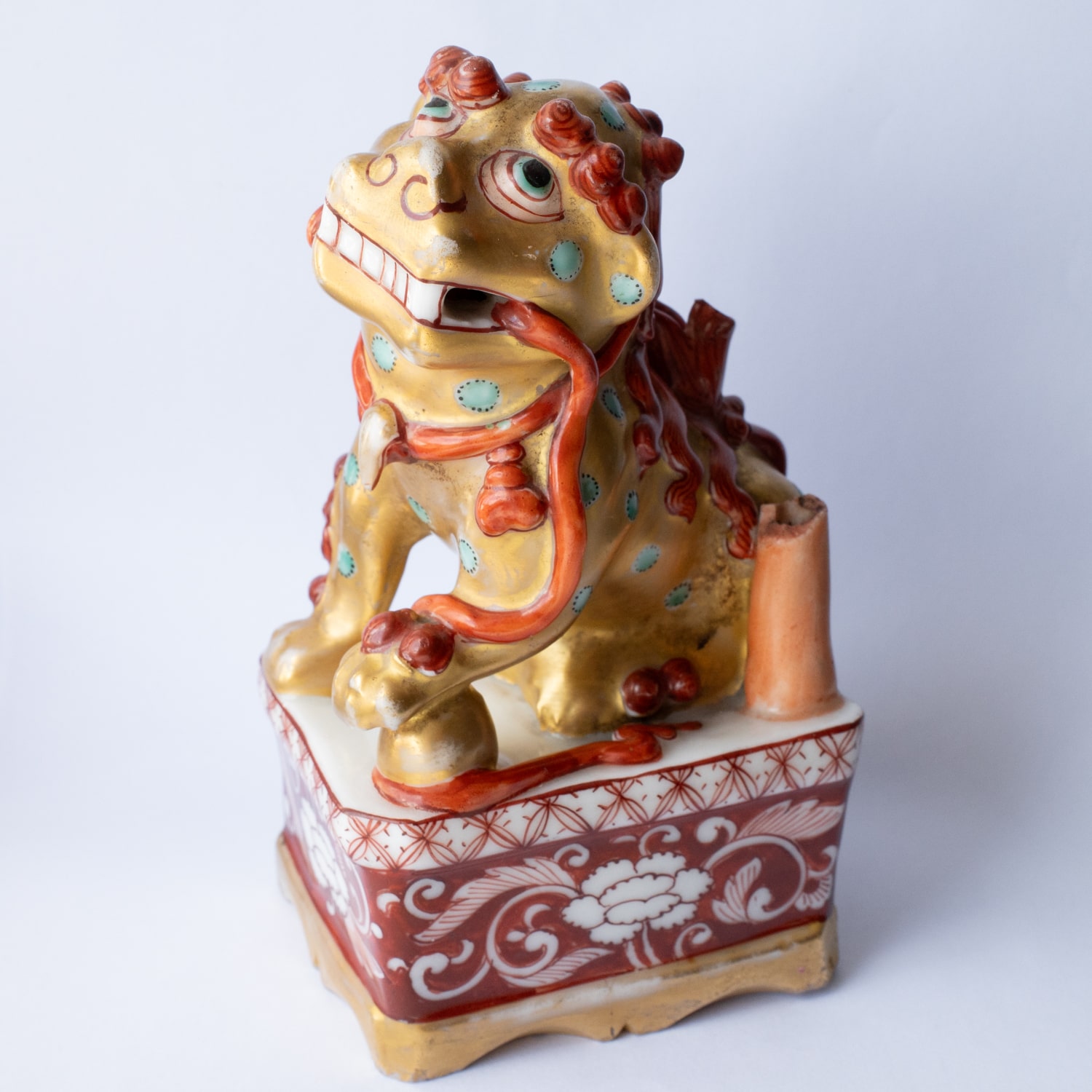
Another late 17th or early 18th century Blanc de Chine joss stick holder in the form of a Buddhist lion with a different type of clobbered overglaze decoration.
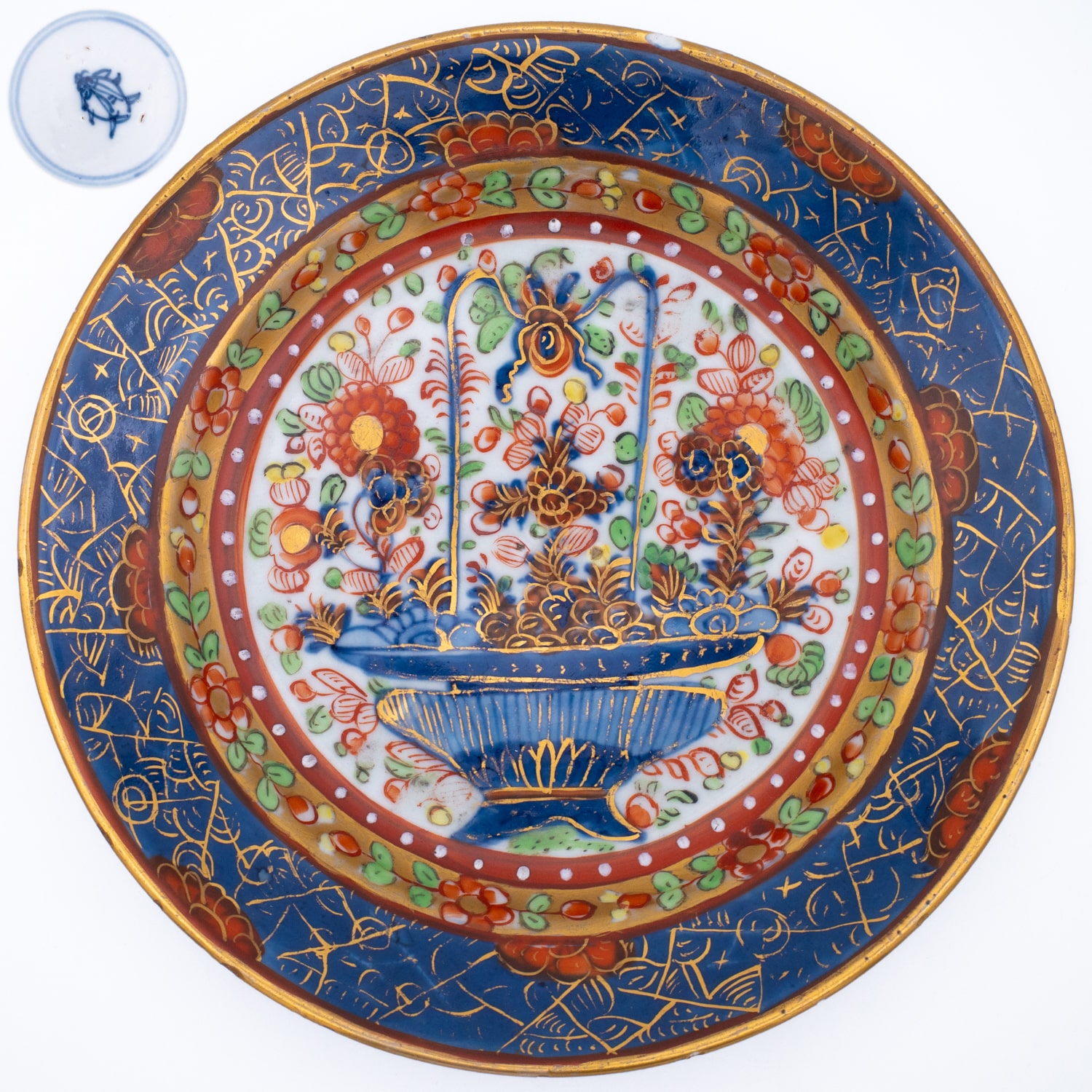
Clobbered blue and white porcelain dish decorated with typical ‘flower basket’ pattern and marked with underglaze blue double fish mark inside a double circle. 18th century.
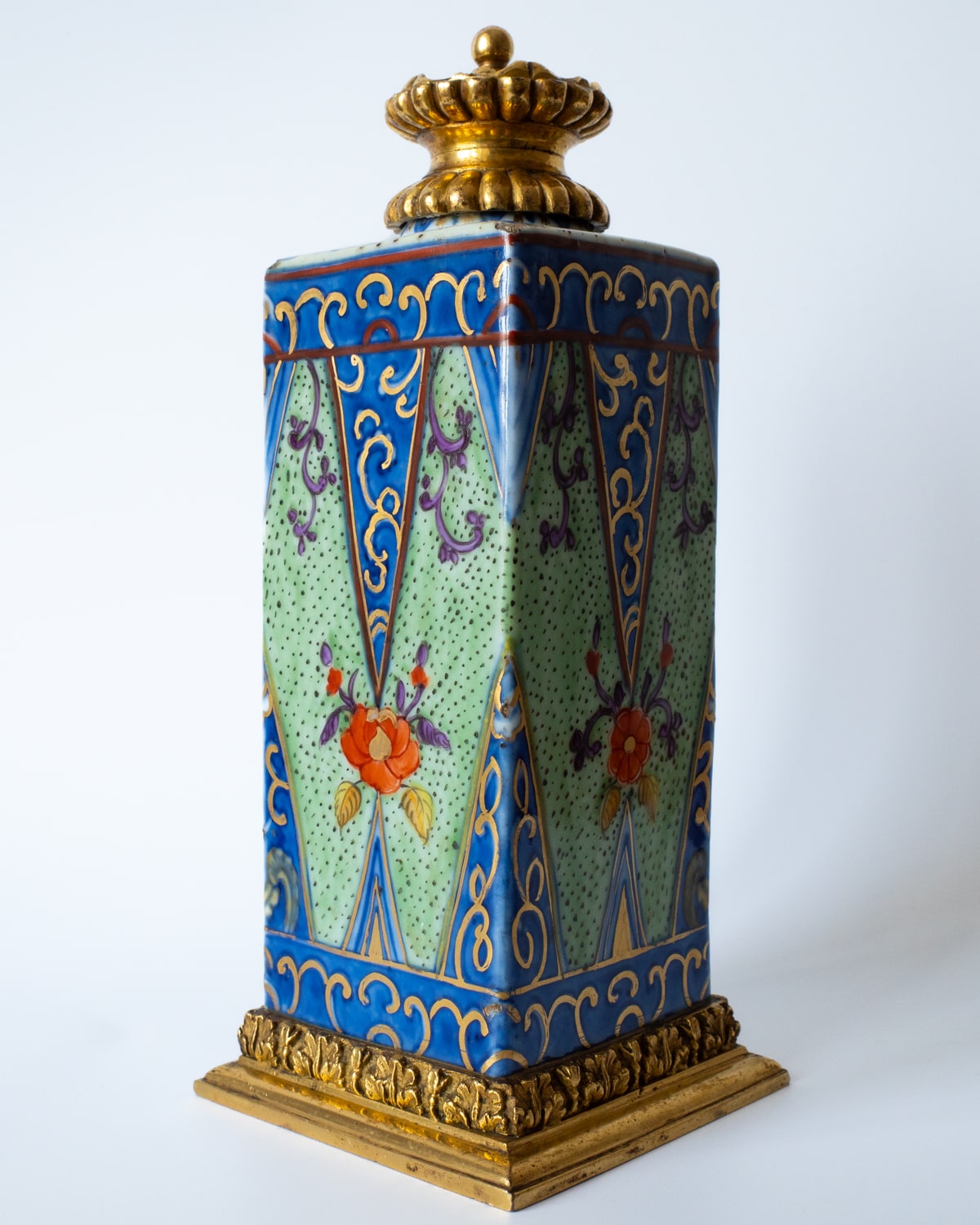
Rare antique Chinese square-form blue and white export porcelain bottle with later European polychrome overglaze decoration and ormolu mounts. 18th-19th century.
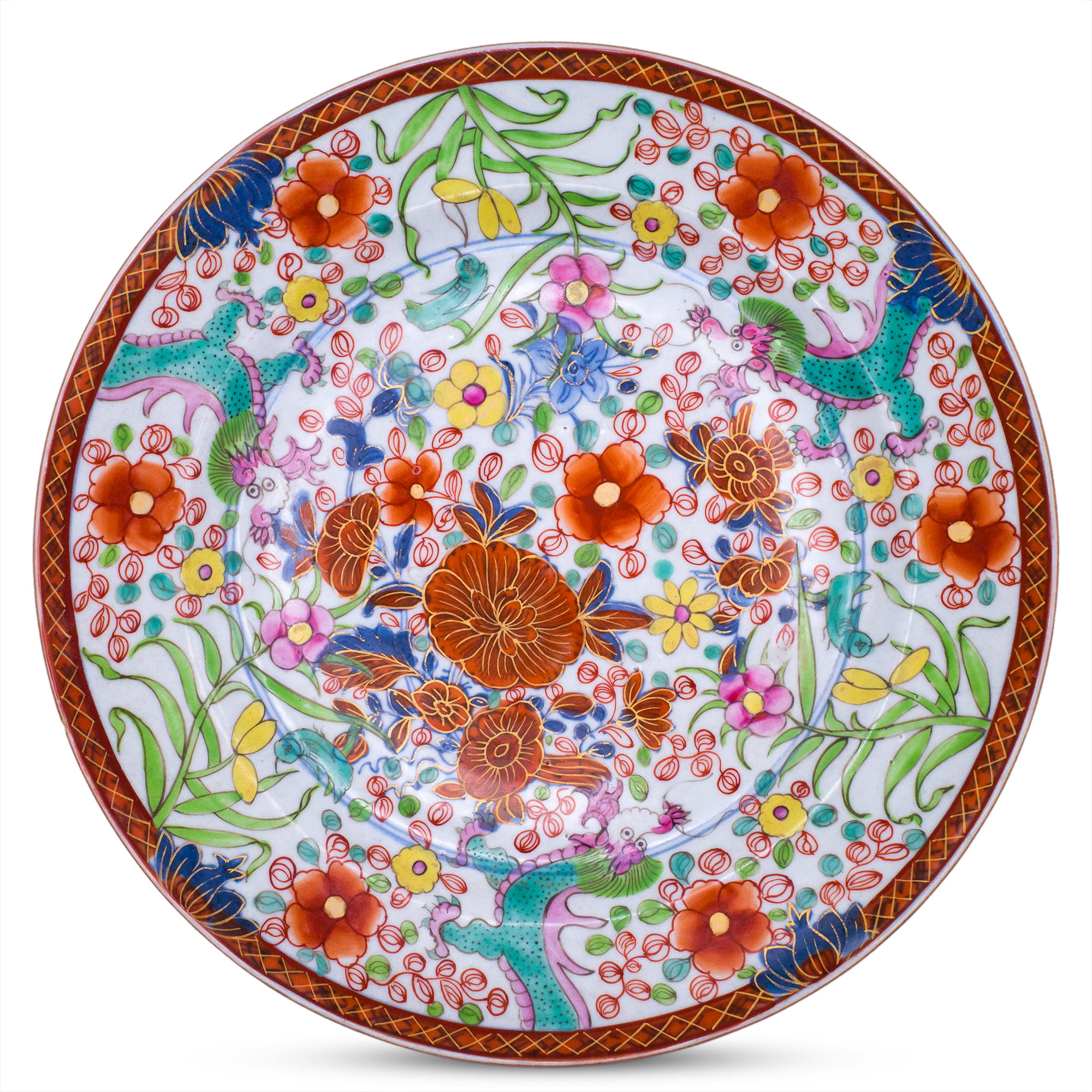
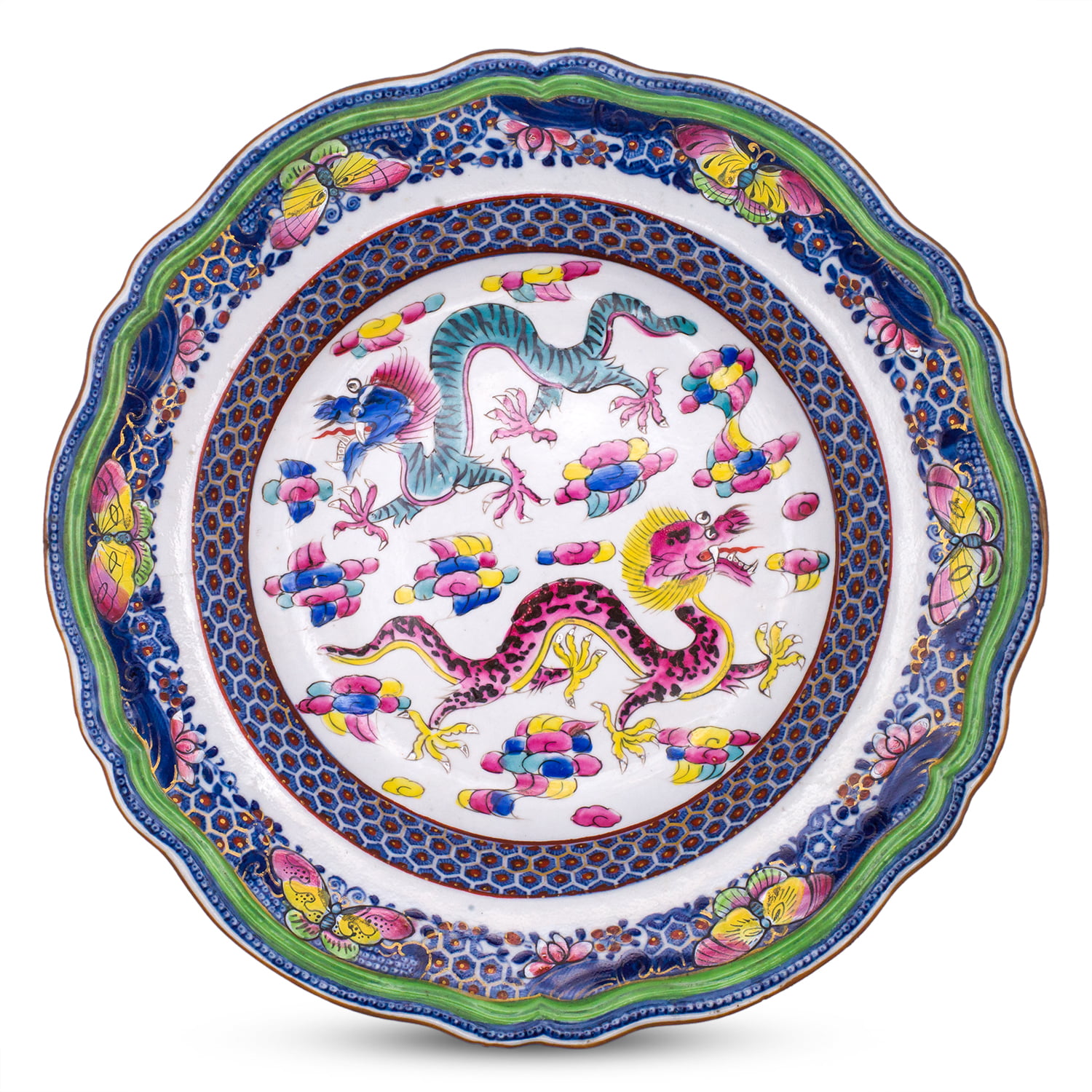
Antique Chinese clobbered blue and white export porcelain dish with dragons and floral sprays – this type of dragons with white faces is generally thought to indicate pieces decorated in London.
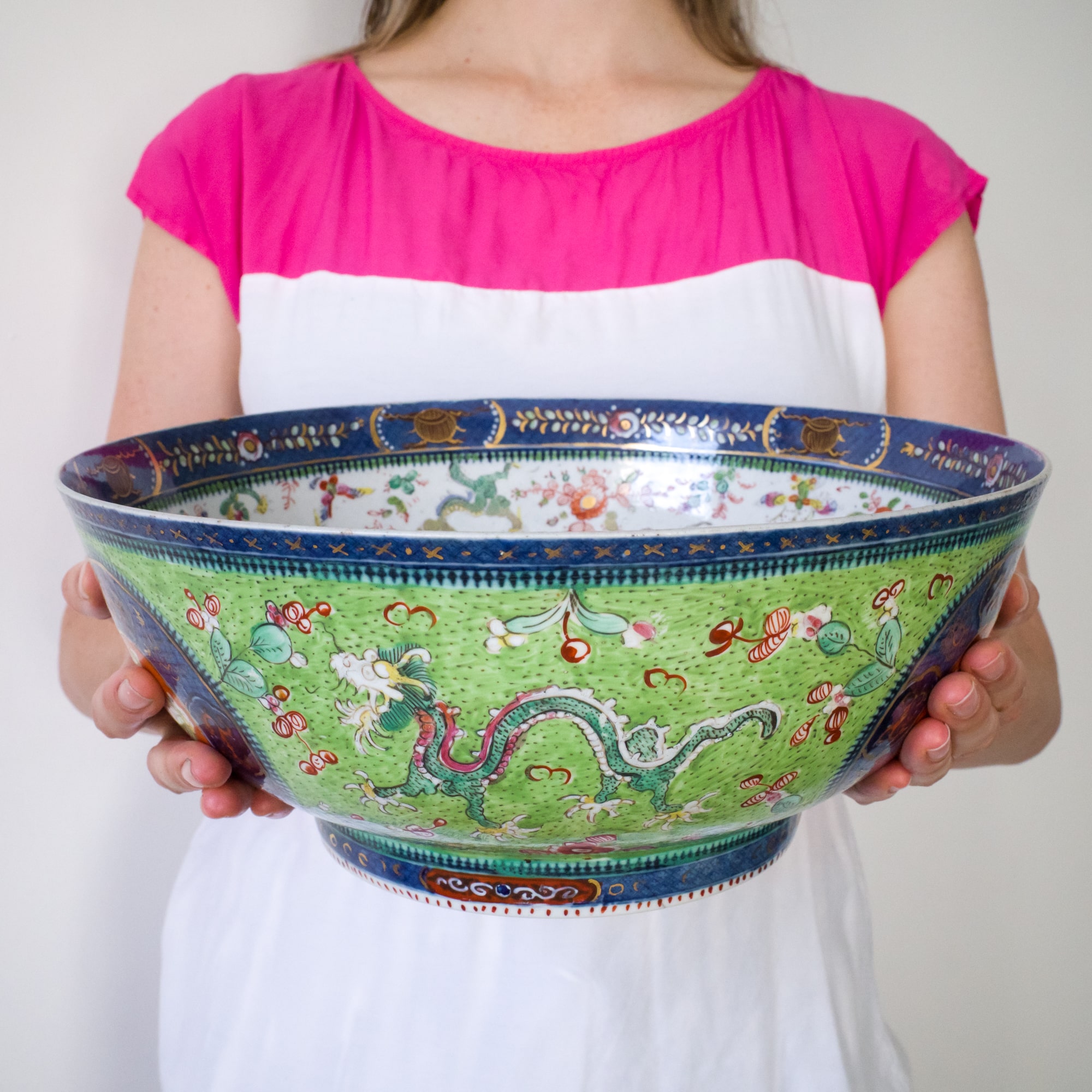
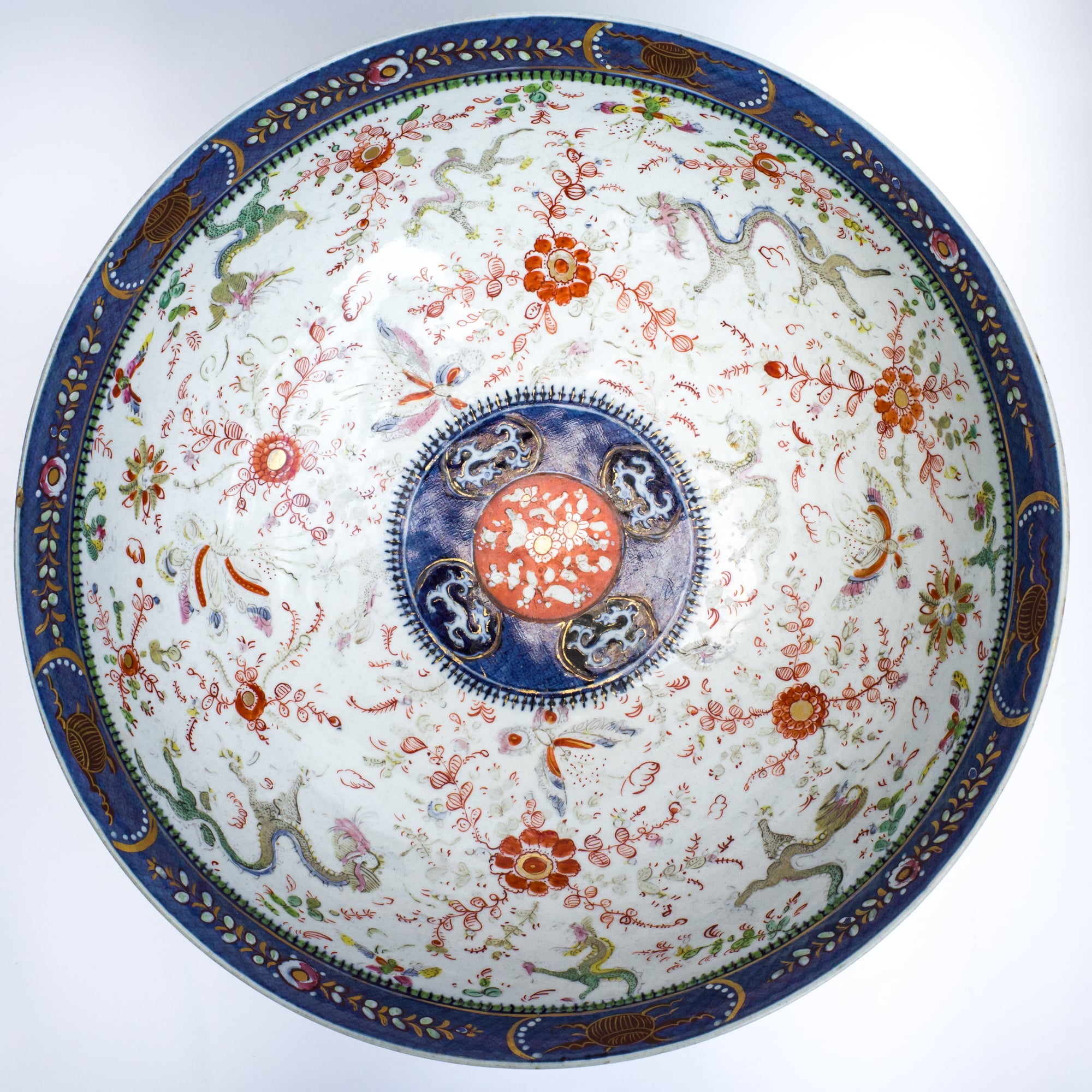
Large clobberware Chinese export porcelain punch bowl decorated with dragons and butterflies, diameter 31 cm – another characteristic of pieces decorated in England is bright lime green enamel used for backgrounds and borders.
Fully clobbered interior of the bowl above
Clobbered Chinese Qianlong period Fitzhugh type export porcelain dish, 18th century – this one is interesting as it features different type of dragons reminiscent of those found of works by Miles and C. J. Mason.
Clobbered 18th century blue and white ‘Long Eliza’ vase with Kangxi conch shell mark – this vase had some damage at the top and was cut down. Clobbering was then used to conceal this alteration and to further embellish it in order to make it more saleable.
Another Kangxi period blue and white porcelain vase with later European overglaze decoration. Painted with moulded lappets enclosing ‘Long Elizas’ and floral jardinieres on stands. Marked with underglaze blue ‘Yu’ mark with later iron red pseudo-Chinese mark painted over it (below).
Many pieces of Chinese porcelain were clobbered in order to conceal small glaze imperfections or damage. Notice prominent fritting on this 18th century export dish.
Unusual Chinese blue and white export porcelain dish with later European polychrome decoration featuring a profusion of floral sprays framed by a simple diaper border.
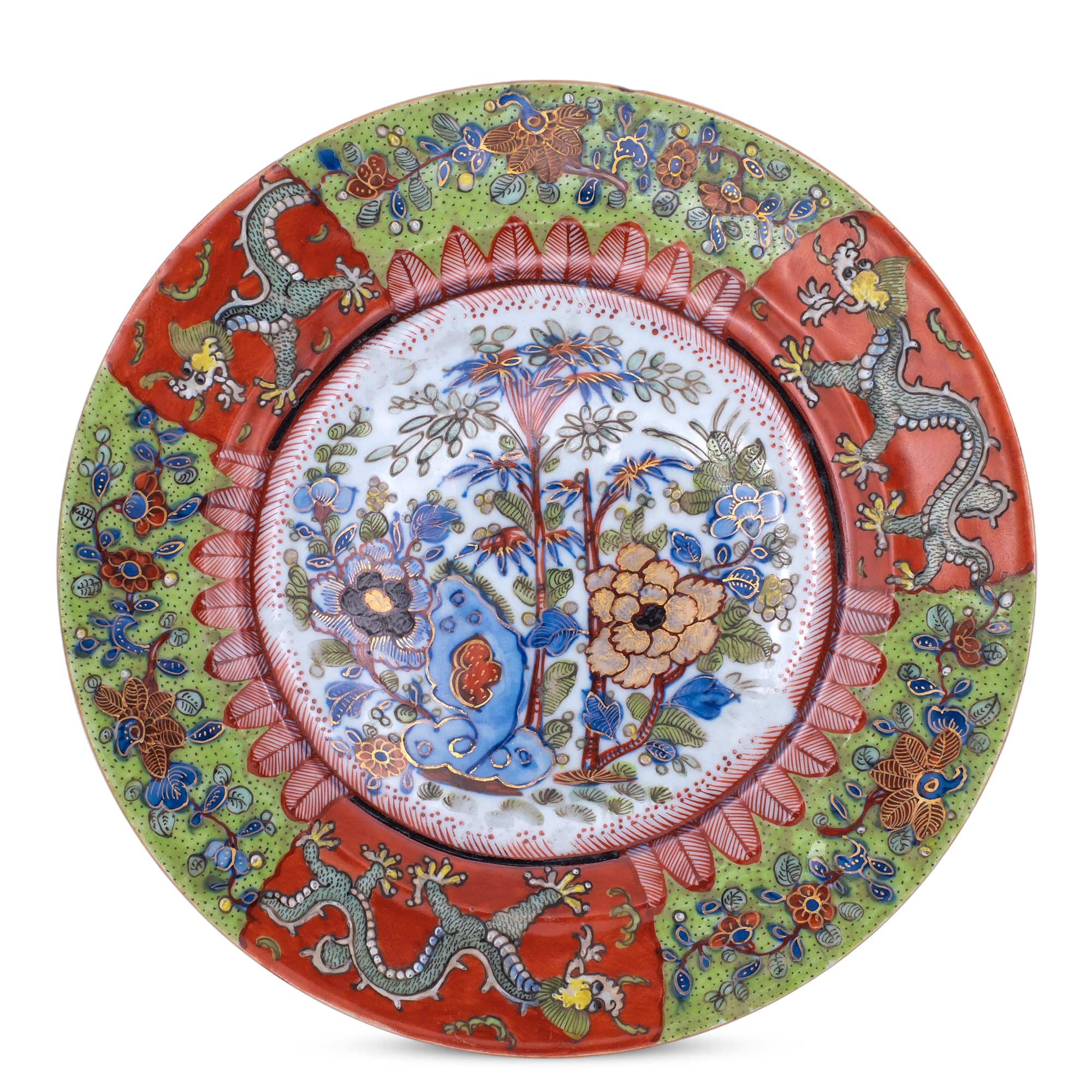
More examples of 18th century porcelain decorated in England with typical dragons and stippled lime green background.
This one also features panels with bright yellow and stippled blue-green background.
Antique Chinese clobbered blue and white export porcelain dish with chickens. 18th century
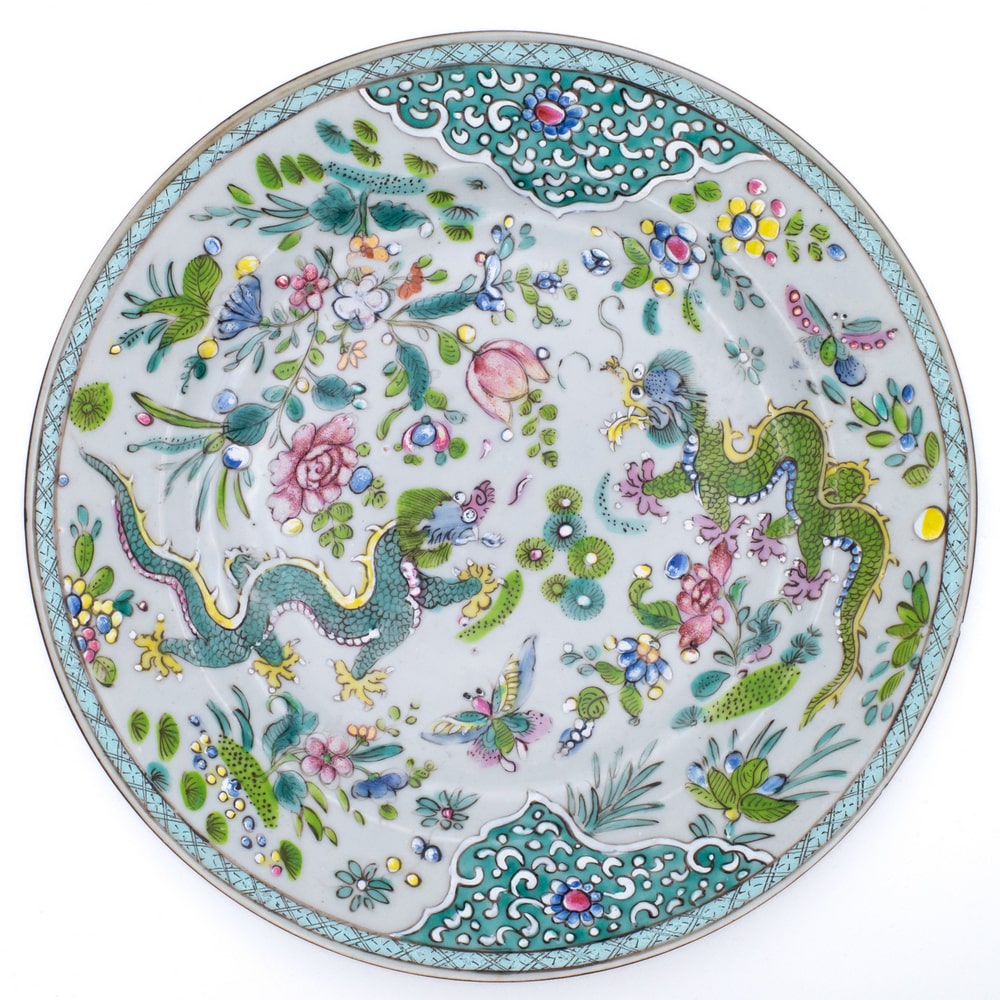
This one is even more unique as the original Chinese dish is decorated in overglaze Famille rose enamels rather than usual underglaze blue.
What’s unusual about this example is that it doesn’t seem to have any original Chinese decoration (apart from the turquoise outer border perhaps?).
Clobbered Qing dynasty blue and white porcelain dragon tea bowl with original underglaze blue square shop mark.
Some pieces of clobber ware – such as this 18th century tea bowl – were marked with nonsensical pseudo-Chinese iron red marks. You can find more examples of these on our Chinese porcelain marks identification page HERE.
Another 18th century Chinese clobbered tea bowl, this time with both original underglaze blue maker’s mark and later pseudo-Chinese iron red mark.
Blue and white porcelain saucer decorated with lotus scrolls and with later European polychrome overglaze decoration with a lime green background. Base marked with typical rectangular iron red pseudo-Chinese mark.
Blue and white porcelain saucers featuring central medallions with a bird perched on a rock, surrounded by various flowers all around. Polychrome overglaze decoration added later in Europe. Bases marked with typical rectangular iron red pseudo-Chinese marks.
Fabulous Chinese clobbered blue and white jar featuring colourful mountainous landscape scene with a large bird, flowers, huts and a fisherman. Not marked.
Chinese ‘clobbered’ blue and white jar with later European overglaze decoration featuring colourful dragons, butterflies and flowers painted very much in the manner of C. J. Mason. Not marked.
Another similar blue and white decorated jar with typical landscape scene with a fisherman and unusual later European ‘clobbered’ decoration featuring flowers, birds, turtle and a crab.
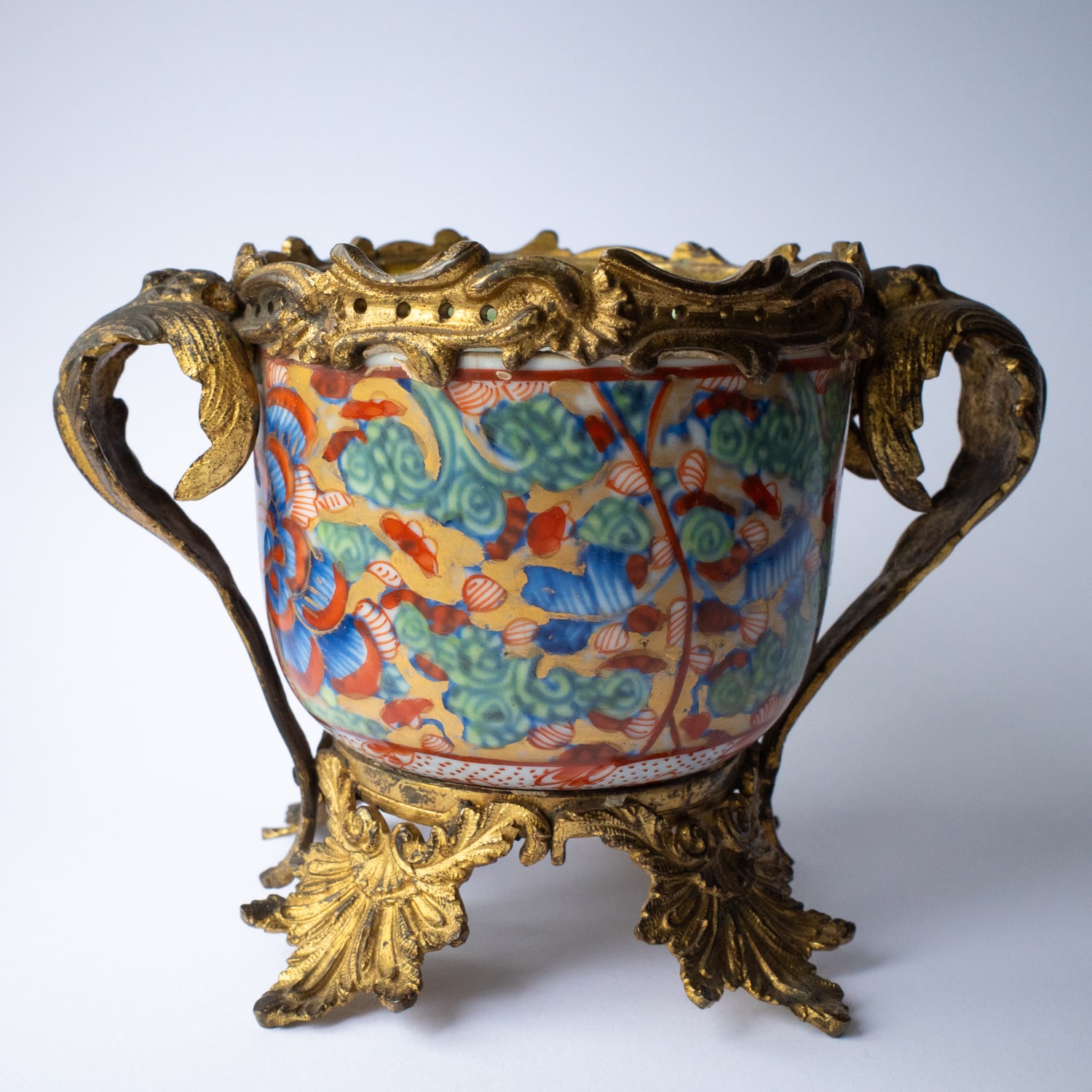
Rare antique Chinese blue and white porcelain pot with later European polychrome overglaze decoration and ormolu mounts. Base marked with typical iron red pseudo-Chinese mark.
We will keep updating this page as we come across additional unique clobbered pieces of Chinese porcelain. Last updated: September 2025
We use cookies to improve your experience while you navigate through the website. Click 'Accept' to consent to the use of all the cookies or 'Settings' to adjust your choices.
Functional
Always active
The technical storage or access is strictly necessary for the legitimate purpose of enabling the use of a specific service explicitly requested by the subscriber or user, or for the sole purpose of carrying out the transmission of a communication over an electronic communications network.
Preferences
The technical storage or access is necessary for the legitimate purpose of storing preferences that are not requested by the subscriber or user.
Statistics
The technical storage or access that is used exclusively for statistical purposes.The technical storage or access that is used exclusively for anonymous statistical purposes. Without a subpoena, voluntary compliance on the part of your Internet Service Provider, or additional records from a third party, information stored or retrieved for this purpose alone cannot usually be used to identify you.
Marketing
The technical storage or access is required to create user profiles to send advertising, or to track the user on a website or across several websites for similar marketing purposes.